Source ULPA Borosilicate Filter Cartridge for Food, Industry, Chemical
Find 30 verified options for ULPA Borosilicate Filter Cartridge designed for food and beverage, industrial, and chemical applications. Buyers can compare specifications including filtration grades, materials, and removal ratings to select the right unit for their needs.
Key considerations
Products List


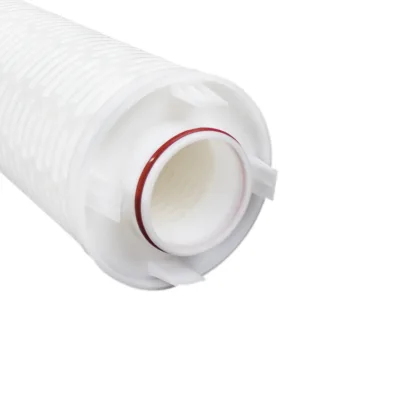
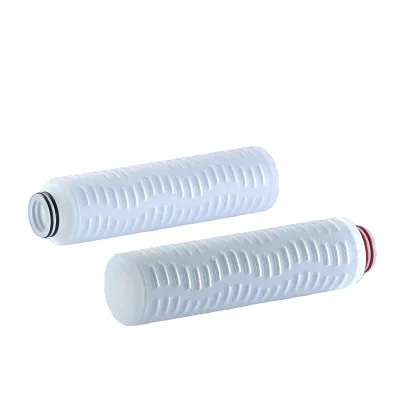
Carbon Cellulose Filter Cartridge for Potable Water & Plating Solution Treatment
$2.50 - $3.00
MOQ: 100 Pieces


Ultrafiltration Filter Cartridge
$0.14 - $0.42
MOQ: 1000 Pieces
Hebei Green Spring Environmental Protection Equipment Technology Co., Ltd


Comprehensive Sourcing Guide
Strategic Sourcing Guide for High-Purity Filtration Components
Understanding the Technical Landscape of Advanced Filtration
When sourcing components for high-purity applications, buyers must first distinguish between the broad category of activated carbon filters and the specific requirements of ultra-low particulate air (ULPA) or high-efficiency liquid filtration systems. The supplied product data indicates a market presence of activated carbon filters, often categorized as compact or vertical units, with specific models such as the bayonet series and CPPL/DPPL. These units are frequently designed for food and beverage, industry, and environmental protection applications. However, the core keyword "ULPA Borosilicate Filter Cartridge" points toward a distinct technological tier involving glass fiber media and borosilicate construction, which differs significantly from the polypropylene (PP) or stainless steel 304/316 options also observed in the dataset.
The provided facts highlight several filtration grades, including "PRE Filter" and "Medium Filter," alongside removal ratings ranging from 10 microns down to 0.1 microns. While the dataset explicitly lists "Glass Fiber/PP Nominal/PP Absolute" as a media type and "Fiberglass" as a medium material, it does not explicitly confirm the presence of borosilicate glass in the specific listings provided. Therefore, a buyer seeking ULPA-grade borosilicate cartridges must verify if the specific supplier's glass fiber media meets the chemical resistance and thermal stability standards associated with borosilicate, rather than assuming all fiberglass products in the catalog possess these properties. The observed standard sizes include 10-inch lengths and specific outer diameters like 65mm or 115mm, but ULPA cartridges often require precise dimensional tolerances that may differ from the "Regular size; Customizable" standards noted in the general inventory.
Compliance Verification and Certification Standards
Navigating the certification landscape is critical when procuring filtration media for sensitive industries. The observed product data confirms the presence of CE certification and CE RoHS compliance for several units, with origins traced to China, specifically Ningbo Zhejiang and Shanghai. These certifications indicate adherence to European safety and environmental standards for general industrial equipment. However, for ULPA-grade components, the presence of a CE mark alone is often insufficient. Buyers must verify if the specific borosilicate cartridges have undergone testing for particulate retention efficiency, which is the defining characteristic of ULPA filters.
The dataset mentions ISO9001 and ISO14001 as background standards, though these are flagged as low-confidence for concrete claims. Consequently, a prudent procurement strategy involves requesting current, valid certificates of conformity directly from the supplier rather than relying on general market knowledge. For applications involving the chemical industry or liquid filtration, the material composition must be verified against the specific chemical agents being filtered. The observed materials include 304/316 Stainless Steel and Polypropylene, which offer different chemical compatibilities. If the application requires the inertness of borosilicate glass, the buyer must explicitly confirm that the "Glass Fiber" media listed in the product descriptions is indeed borosilicate and not a standard soda-lime or other glass variant.
Cost Drivers and Pricing Variables
The market data reveals a wide observed price range in USD from 0.1 to 415, reflecting the diversity of products from simple pre-filters to complex, high-pressure units. This variance is driven by several factors inherent to the filtration industry. The primary cost driver for ULPA borosilicate cartridges is the raw material quality and the precision of the manufacturing process. Borosilicate glass is more expensive to source and process than standard polypropylene or non-woven polyester fibers. Furthermore, the "Efficient Filtration" performance attribute observed in the data suggests that higher efficiency ratings correlate with higher costs due to the tighter manufacturing tolerances required.
The Minimum Order Quantity (MOQ) ranges from 1 to 5000 units, indicating that buyers can access small batches for testing or large volumes for production. However, the cost per unit often decreases with volume, a standard economic principle in B2B procurement. The packaging methods observed, such as "25PCS/CTN," "Carton," "Shrink Wrapped Package," and "Wooden Box Package," also influence the final landed cost. For fragile borosilicate components, specialized packaging like wooden boxes is likely necessary to prevent breakage during transit, which adds to the overall expense. Buyers should also consider the "Motive Force" of the system; units designed for "Pressure" applications with a "Max. Pressure" of 150psi may command a premium over atmospheric or low-pressure variants.
Typical Applications and Operational Environments
The supplied facts identify specific application areas including Food and Beverage, Chemical Industry, Environmental Protection, and Liquid Filtration. These sectors demand high reliability and specific material compatibilities. For instance, in the food and beverage industry, the "Filter Bag Environment" is noted as "Room Temperature," but ULPA borosilicate cartridges are often preferred for processes requiring higher thermal stability or resistance to aggressive solvents found in the chemical industry. The "Style" of the filters varies from "Vertical" to "Tube," and the "Cartridge Installation" method is described as "Vertical Lifting," which impacts the mechanical design of the filtration housing.
The removal ratings observed in the data, such as 10um, 1, 5, 10, 20, 50, 100 Micron, and finer ratings like 0.1/0.22/0.45/1/3/5 microns, suggest a broad spectrum of filtration capabilities. ULPA filters typically operate at the lower end of this spectrum, capturing particles smaller than 0.12 microns. If the buyer's application requires sterility or ultra-high purity, the "Filtration Precision" must be rigorously matched to the process requirements. The "Color" options of White, Yellow, and Blue may indicate different media densities or chemical treatments, which should be verified against the specific fluid being filtered. The "Outer Diameter" and "Inner Diameter" specifications, such as 2.2, 2.4, 2.5, 4.5 Inch and 1.1 Inch, are critical for ensuring compatibility with existing filtration housings.
Supplier Evaluation and Sourcing Strategy
Evaluating suppliers for high-specification components like ULPA borosilicate cartridges requires a multi-faceted approach. The dataset indicates that products originate from China, with specific hubs in Ningbo Zhejiang and Shanghai. Buyers should prioritize suppliers who can demonstrate a clear supply chain for high-purity glass materials. The presence of "Customization" as an available attribute is a positive indicator, suggesting that suppliers may be willing to adapt standard models to meet specific ULPA requirements. However, buyers must distinguish between "Customizable" standard sizes and the ability to manufacture entirely new borosilicate geometries.
A robust supplier evaluation should include a review of their quality control processes. The observed "Standard Export Packing" and "Standard Export Packing" suggest a baseline of logistics competence, but for fragile glass components, the "Wooden Box Package" option is a more reliable indicator of careful handling. Buyers should also inquire about the "Motive Force" capabilities of the supplier's products, ensuring they can support the pressure requirements of the intended system. The "Usage" attributes, such as "Chemical Industry" and "Environmental Protection," serve as proxies for the supplier's experience in handling demanding applications. A supplier with a proven track record in these sectors is more likely to deliver consistent quality for ULPA-grade products.
Quality Control and Performance Verification
Quality control for filtration components is paramount, especially when dealing with materials like borosilicate glass which must maintain structural integrity under pressure. The observed "Performance" attribute of "Efficient Filtration" is a general claim that must be substantiated with test data. Buyers should request specific test results regarding the "Removal Rating" and "Filtration Precision" for the specific borosilicate cartridges they intend to purchase. The data lists various removal ratings, but the actual performance of a ULPA cartridge must be verified against the specific particle size distribution of the application.
The "Cartridge Filter" material is listed as "Non-Woven Polyester Fiber" in some entries, while "Glass Fiber" is mentioned in others. This distinction is crucial; a buyer seeking borosilicate must ensure the supplier does not substitute standard glass fiber for the required borosilicate grade. The "Filter Bag Sectional Shape" being "Round Bag" and the "Cartridge Installation" being "Vertical Lifting" are design features that impact the flow dynamics and ease of maintenance. Quality assurance protocols should include checks for dimensional accuracy, such as the "Length" of 5, 10, 20, 30, 40 Inch or Customized, and the "Outer Diameter" specifications. Any deviation from the stated tolerances could compromise the seal and filtration efficiency.
Long-Term Procurement and Lifecycle Management
Long-term procurement success depends on understanding the lifecycle of the filtration components. The "Standard" sizes observed, such as 10" and 370mmx375mmx1275mm, suggest a reliance on established industry norms. However, the "Customizable" nature of the products offers flexibility for future-proofing. Buyers should consider the lead times and production capacity of the supplier, especially when dealing with specialized materials like borosilicate. The "Lead Time" is not explicitly provided in the data, but the "MOQ" range of 1 to 5000 implies that suppliers can handle both immediate needs and bulk orders.
Sustainability and environmental impact are increasingly important in procurement. The "Usage" in "Environmental Protection" and the "CE RoHS" certification indicate a focus on compliance with environmental regulations. Buyers should evaluate the recyclability of the filter media and the packaging materials. The "Shrink Wrapped Package" and "Carton" options are common, but for long-term contracts, suppliers who offer eco-friendly packaging solutions may provide additional value. Finally, the "Max. Pressure" of 150psi observed in the data serves as a benchmark for system design; ensuring that the selected cartridges can withstand the operational pressure over their entire lifespan is essential for preventing premature failure and maintaining process safety.
Comparative Analysis of Filtration Options
To assist in decision-making, the following table compares key attributes observed in the general product data against the specific requirements for ULPA borosilicate cartridges. This comparison highlights areas where verification is essential to ensure the selected product meets the high-purity standards.
| Attribute | General Observed Data | ULPA Borosilicate Requirement | Verification Action |
|---|---|---|---|
| Material | Activated Carbon, PP, 304/316 SS, Fiberglass | Borosilicate Glass | Confirm material composition certificate |
| Filtration Grade | PRE Filter, Medium Filter | ULPA (Ultra-Low Particulate Air) | Request efficiency test data (DOP/PAO) |
| Removal Rating | 10um to 0.1um | < 0.12 microns | Verify specific micron rating for target application |
| Certification | CE, CE RoHS | CE, plus specific ULPA standards | Check for ISO 14644-1 or equivalent |
| Pressure Rating | Max 150psi | Variable (often higher for glass) | Confirm burst pressure and operating limits |
| Packaging | Carton, Shrink Wrap, Wooden Box | Reinforced, shock-absorbent | Inspect packaging for fragility protection |
| Origin | China (Ningbo, Shanghai) | Verified Supply Chain | Audit supplier for glass sourcing capabilities |
This structured approach ensures that buyers can navigate the complexities of the filtration market, leveraging the available data while rigorously validating the specific attributes required for high-performance ULPA borosilicate cartridges. By focusing on technical verification, compliance, and supplier capability, procurement teams can secure reliable components that meet the stringent demands of modern industrial and laboratory applications.
FAQs
What materials are used for these filter cartridges?
Materials include activated carbon, fiberglass, polypropylene, and 304 or 316 stainless steel. Some units feature non-woven polyester fiber media, while others utilize glass fiber for specific filtration needs.
Which certifications are available for these products?
Available certifications include CE and CE RoHS compliance. These standards indicate adherence to European safety and environmental regulations for general industrial equipment used in various filtration applications.
Can these filters be customized for specific needs?
Yes, customization is available for product models and dimensions. Buyers can request specific lengths ranging from 5 to 40 inches or customized sizes to match their existing filtration housing requirements.
What is the maximum pressure rating for these units?
The maximum pressure rating observed is 150 psi. This capacity supports pressure-based filtration systems used in chemical industries and environmental protection applications requiring robust mechanical performance.
How are these cartridges typically packaged for shipping?
Packaging options include cartons, shrink-wrapped packages, and wooden boxes. Specific configurations like 25 pieces per carton or standard export packing ensure safe transit for fragile components.
Where are these products manufactured?
Products originate from China, with specific hubs in Ningbo Zhejiang and Shanghai. These locations serve as primary sources for the observed range of filtration components and accessories.